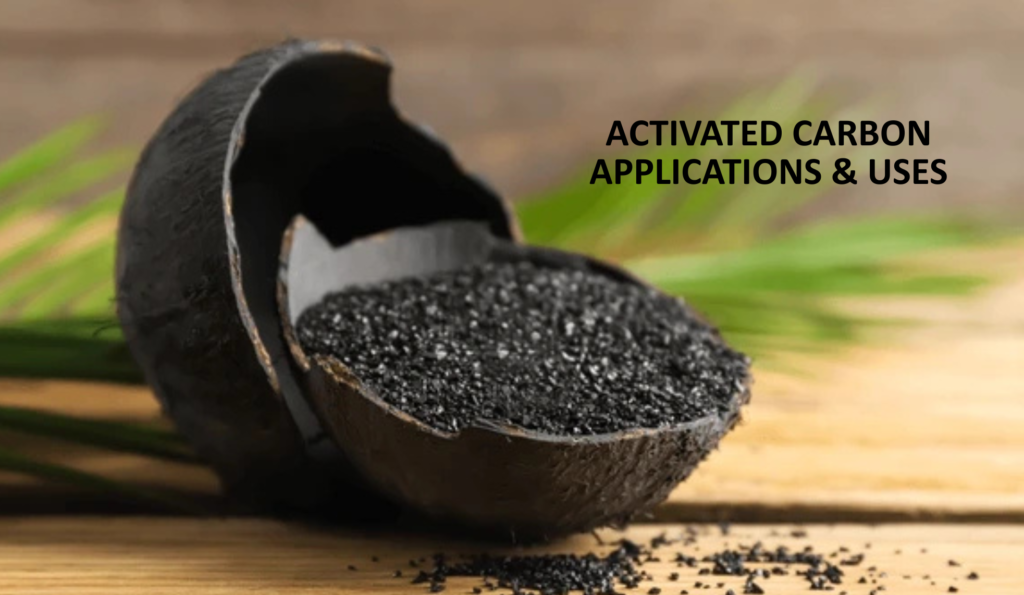
Activated carbon is one of the most widely used purification materials in industry, and also one of the most misunderstood. The same base material, carbon, can be processed into dozens of physical forms and grades, each suited to a different job. A powder that works well for decolourising edible oil will not perform in a gas mask cartridge, and a granular carbon built for drinking water treatment is not the right choice for a gold recovery circuit.
This guide explains what activated carbon is, how adsorption actually works, the main physical forms it comes in, and the raw materials it is made from. It then walks through the major industrial applications of activated carbon, water treatment, wastewater treatment, air and gas purification, VOC removal, edible oil refining, food and beverage processing, pharmaceutical manufacturing, chemical purification, and gold recovery in mining, connecting each to the carbon characteristics required and the Rajindra Carbons grades built for that job.
- What Is Activated Carbon?
- How Does Activated Carbon Work?
- Types of Activated Carbon
- Raw Materials: Wood vs Coconut Shell
- Activated Carbon Applications
- Water Treatment
- Wastewater Treatment
- Air Purification & VOC Removal
- Gas Purification
- Edible Oil Refining
- Food & Beverage Processing
- Pharmaceutical Applications
- Chemical Purification
- Gold Recovery & Mining
- Odour Control & Respiratory Protection
- Which Grade Is Right for Your Application?
- Rajindra Carbons Product Range
- How to Choose the Right Grade
- FAQs
1. What Is Activated Carbon?
Activated carbon is a highly porous form of carbon engineered to have a very large internal surface area, which allows it to adsorb organic molecules, colour bodies and certain gases from liquids or gases passed over it. A single gram of activated carbon can have several hundred square metres of internal surface, packed into a network of microscopic pores.
Ordinary charcoal has some porosity, but activated carbon is different. During manufacture, the base carbon (wood or coconut shell, for example) is exposed to controlled heat and, in some processes, chemical activation. This burns away disorganised carbon and opens up a dense network of pores running through the material, dramatically increasing surface area compared to unactivated charcoal.
Micropores, mesopores and macropores
Activated carbon’s pore structure is generally described in three size ranges: micropores (under 2 nanometres), mesopores (2 to 50 nanometres), and macropores (above 50 nanometres). Micropores dominate total surface area and are responsible for most gas-phase adsorption and small-molecule capture. Mesopores and macropores act as transport channels, moving larger molecules and liquids toward the micropore network. A carbon’s balance of these pore types, shaped by its raw material and activation process, determines which applications it suits.
Adsorption vs absorption
Activated carbon works by adsorption, not absorption. Absorption is when a substance is taken into the bulk of a material, the way a sponge takes up water. Adsorption is when molecules adhere to a surface, in this case the vast internal surface of the carbon’s pore network, through physical and chemical attraction. This distinction matters because it explains why surface area and pore structure, rather than bulk volume, determine an activated carbon’s capacity.
2. How Does Activated Carbon Work?
Activated carbon removes contaminants by adsorbing them onto its internal pore surface as a liquid or gas passes through or over the carbon bed. How effectively this happens depends on the carbon’s pore structure, the contact time available, and the chemical nature of the target contaminant.
Factors that determine adsorption performance
- Pore structure and surface area: more micropore surface generally means more capacity for small organic molecules and gases.
- Particle size: finer particles (powder) offer faster contact and are used for batch dosing; coarser particles (granules, pellets) are used in continuous fixed-bed systems.
- Contact time: longer contact between the fluid and the carbon generally improves adsorption; this is why fixed-bed column design and flow rate matter as much as the carbon itself.
- Surface chemistry: the carbon’s surface can be acidic, neutral or modified (impregnated) to target specific molecules or improve selectivity.
- Moisture and pH: excess moisture in gas-phase carbon reduces adsorption capacity; pH affects how some contaminants behave in liquid-phase systems.
- Contaminant characteristics: molecule size, polarity and concentration all influence how readily a compound is adsorbed.
Two standard indicators are commonly used to characterise a carbon’s adsorption capacity. Iodine number is a general indicator of a carbon’s micropore surface area and its ability to adsorb small molecules, commonly referenced for liquid-phase and water-treatment carbons. Methylene blue value reflects mesopore capacity and is often used as an indicator of a carbon’s suitability for adsorbing larger molecules, such as colour bodies in decolourisation processes. Higher values generally indicate greater adsorption capacity relevant to that pore size range, but the right number for a given job always depends on the application.
3. What Are the Main Types of Activated Carbon?
Activated carbon is manufactured in several physical forms. The form determines how the carbon is dosed or packed, and therefore which processes it fits.
Powdered Activated Carbon (PAC)
Powdered activated carbon is a fine powder, typically under 75 microns (200 mesh), dosed directly into a liquid and removed afterward by filtration. Because of its fine particle size, PAC offers a very large amount of surface area in immediate contact with the liquid, which makes it fast-acting for batch decolourisation and purification processes. It is widely used in edible oil refining, pharmaceutical purification, food and beverage decolourisation, and batch water treatment. Rajindra Carbons’ wood-based powder range, covered in the product range section below, is built for exactly these liquid-phase, filtration-based processes. See also this overview of powdered activated carbon and its role in reducing toxicity in liquid streams.
Granular Activated Carbon (GAC)
Granular activated carbon is a coarser, irregular particle, typically 0.6 to 2.4 mm, packed into fixed-bed columns through which liquid or gas flows continuously. Unlike powder, GAC stays in place in the bed and is reused until its adsorption capacity is exhausted, at which point it can often be reactivated. GAC is the standard form for municipal and industrial water treatment, and for many gas-phase and air-treatment systems where a longer, continuous contact process is required.
Pelletized Activated Carbon
Pelletized activated carbon is extruded into uniform cylindrical rods, typically 3 to 6 mm in diameter, which gives it a low pressure drop when gas is pushed through a packed bed. This uniform shape and consistent void space between pellets makes pelletized carbon well suited to gas-phase applications such as VOC removal, odour control, and industrial gas purification, particularly where high gas volumes must move through the system without excessive back-pressure.
Specialty and Impregnated Activated Carbon
Impregnated activated carbon has a reagent bound to its pore surface during manufacture, which changes what it selectively adsorbs. A silver-impregnated carbon, for example, is used to control microbial regrowth in drinking water filters, while an ABEK-type impregnation targets a broader range of gases relevant to gas mask and CBRN cartridge applications. Custom wood:coconut blends are also used where a bespoke balance of macroporous and microporous structure is needed for a specific process.
4. Raw Materials: Wood-Based vs Coconut-Shell Activated Carbon
Activated carbon can be manufactured from various carbonaceous raw materials. Rajindra Carbons produces both wood-based and coconut-shell activated carbon, because the two source materials produce carbons with genuinely different structural characteristics, not because one is universally better than the other. The right raw material depends on the application. Read more on the versatility of wood, coconut and bamboo-based activated carbons.
Wood-based activated carbon
Wood-based activated carbon (from pine, poplar, babool and eucalyptus) tends to have a more macroporous structure. This makes it well suited to liquid-phase decolourisation and purification, where larger organic molecules and colour bodies need to be adsorbed efficiently. Wood-based carbon is commonly used in water treatment, edible oil and food decolourisation, and pharmaceutical purification, in both powder and granular forms.
Coconut-shell activated carbon
Coconut-shell activated carbon has a denser, more microporous structure and notably high hardness. This combination of hardness and micropore density makes it well suited to applications where the carbon must withstand mechanical attrition, such as fixed-bed water treatment, VOC and gas-phase adsorption, and gold recovery circuits where carbon is continuously agitated, screened and reactivated. Rajindra Carbons manufactures its coconut-shell range at its own Kerala carbonisation facility, with NSF, Halal and Kosher certification available on relevant grades.
Other carbonaceous raw materials
Activated carbon can also be produced from other carbon-bearing materials such as bamboo, coal or peat. Each raw material, combined with the activation process used, produces a carbon with its own balance of pore structure, hardness and surface chemistry. Rather than one raw material being universally superior, the correct choice is the one whose pore structure and physical characteristics match the application.
5. Applications of Activated Carbon
Activated carbon is used wherever organic contaminants, colour, odour or specific gases need to be removed from a liquid or gas stream. The sections below cover the major industrial applications, what each process requires from the carbon, and which physical form and grade typically fits.
Activated Carbon for Water Treatment
In water treatment, activated carbon adsorbs dissolved organics, taste- and odour-causing compounds, and certain trace contaminants as water passes through a carbon bed or is dosed with powdered carbon. Municipal water utilities commonly use granular activated carbon in fixed-bed filters as a polishing stage after conventional treatment, while industrial water treatment plants use both granular and powdered carbon depending on whether the process is continuous or batch.
Particle size, hardness and iodine number are the key characteristics for this application. A harder, more attrition-resistant granule performs better in continuous fixed-bed contactors, while a fine, high-purity powder suits polishing or batch dosing steps. Rajindra Carbons’ wood granular grades (UCI RC830, UCI RC1240, UCI 4×8) and coconut granular grades (UCI 3x6C, UCI 4x8C, UCI 12x40C) are built for exactly this range of water-treatment duties.
Activated Carbon for Wastewater Treatment
Activated carbon is widely used as a tertiary or polishing step in industrial wastewater treatment, adsorbing residual organics, colour and odour-causing compounds left after biological or chemical treatment. This helps industrial plants meet discharge norms or prepare treated water for reuse.
Because wastewater streams vary widely in organic load, granular carbon is generally preferred for continuous polishing systems, while powdered carbon can be used where a faster, batch-style dosing step is more practical. Read more on how activated carbon is used to treat wastewater.
Activated Carbon for Air Purification and VOC Removal
Activated carbon adsorbs volatile organic compounds (VOCs) and odour-causing molecules from air streams as they pass through a carbon bed, which is why it is a core material in both indoor air purification and industrial air treatment systems.
VOCs are organic chemicals that evaporate readily at room temperature, found in industrial solvents, paints, process emissions and certain manufacturing operations. Because these applications are gas-phase, pore structure and low pressure drop matter more than in liquid-phase work. Granular carbon (UCI 6×18, UCI 4×8) and pelletized carbon (PAC-950, PAC-1300) are both used here, with pellets generally preferred where high gas volumes and low back-pressure are priorities. For a general-purpose reference on carbon-based air filtration at a smaller scale, see this guide to a DIY activated charcoal air purifier.
Activated Carbon for Gas Purification
Beyond general VOC control, activated carbon is used in a range of industrial gas purification duties, from process gas cleanup to specialty gas treatment, where selectivity and consistent activity level matter. Rajindra Carbons’ pellet range, PAC-950 and PAC-1300, is manufactured at two activity levels: 950 mg/g for standard continuous gas-phase duty, and 1300 mg/g for higher-capacity applications where maximum adsorption performance is required in a given bed volume. Where a process needs to target a specific gas or class of contaminant rather than general organics, specialty impregnated grades such as ABEK-type carbon are used instead of plain carbon.
Activated Carbon for Edible Oil Refining
Activated carbon powder is used in edible oil refining to remove colour bodies and trace impurities from vegetable oils, typically dosed by weight into the oil bleaching vessel and removed afterward by filtration. This applies to palm oil, rice bran oil and various specialty oils.
Water-washed coconut powder grades (AC 200E, AC 325E) are used specifically for this application because they leave no acid residues and are pH neutral, which means they do not affect the oil’s acid value. Wood-based powder grades, such as DL Premium, are also used in decolourisation duty where a broader macroporous structure suits the target impurities. For fixed-bed liquid-phase oil purification, such as Merox refining units, the wood granular grade UCI 8×30 Premio is built for that process stream. Learn more in this dedicated guide to activated carbon for edible oil refining.
Activated Carbon for Food and Beverage Processing
In food and beverage processing, activated carbon is used for decolourisation, taste and odour management, and general process purification, most commonly in liquid sugar, juice and spirits production.
Acid-washed coconut granular grades (AC 12x40B, AC 12x30B) are manufactured as beverage-grade carbon, used in spirits purification and liquid sugar decolourisation, with Halal and Kosher certification available. Wood powder grades such as UCI 55N, UCI 55NS and UCI 10/UCI 10NS are used across broader food decolourisation duties. Grade selection in this category depends heavily on the specific process, the target compounds, and any food-safety certification the buyer’s process requires.
Activated Carbon for Pharmaceutical Applications
Pharmaceutical manufacturing uses activated carbon for process purification and decolourisation of active pharmaceutical ingredients (APIs) and intermediates, where purity and batch-to-batch consistency are critical.
Because pharmaceutical processes are held to strict pharmacopoeial standards, acid-washed, pH-neutral, low-ash powder grades are generally selected. Rajindra Carbons positions its UCI UW series, UW-22, UW-24, UW-26 and UW-32, across this range: UCI UW-22 is described as an acid-washed, pH-neutral, ultra-high-purity powder for pharma API decolourisation and BP/USP/EP compliance; UCI UW-24 is a high-purity acid-washed grade with pharmaceutical and food-contact certification; UCI UW-26 is a premium acid-washed powder positioned for demanding API and injectable applications with the lowest ash content in the wood range; and UCI UW-32 is an ultra-fine acid-washed grade positioned for injectable-grade pharmaceutical applications meeting strict BP/USP requirements. DL Premium and UCI 55NS are also used in pharmaceutical and food-contact decolourisation duty where their acid-washed, low-ash characteristics apply.
Activated Carbon for Chemical Purification
In chemical process industries, activated carbon is used to remove organic impurities and colour from process streams, and to protect downstream catalysts and equipment from fouling contaminants. Both wood and coconut carbons are used here, chosen based on whether the process stream is more suited to a macroporous or microporous structure, and whether the duty is batch (powder) or continuous fixed-bed (granular).
Activated Carbon for Gold Recovery and Mining
Gold recovery uses coarse, hard coconut-shell activated carbon to adsorb dissolved gold from cyanide leach solutions in carbon-in-pulp (CIP) and carbon-in-leach (CIL) circuits, and in heap leach operations.
In these processes, gold dissolved by a leaching reagent is adsorbed onto activated carbon, which is then separated from the pulp, stripped of its gold content, and reactivated for reuse in circuit. Because the carbon is repeatedly agitated, screened, transported and reactivated over its working life, hardness and attrition resistance are just as important as adsorption capacity. Coconut-shell carbon is preferred in this application specifically because of its combination of hardness and microporosity.
Rajindra Carbons manufactures a dedicated ACGOLD series for this duty. ACGOLD 6SZ is a 6-mesh coconut gold carbon positioned for high K value and CTC activity in CIL and CIP circuits, with full batch traceability from the company’s own facility. ACGOLD 6SFY is a 6-mesh floatable coconut grade, with surface chemistry positioned for gold adsorption in agitated leach tanks. ACGOLD 8SZ is an 8-mesh coconut gold carbon with K values up to 65 and CTC activity of 45 to 65%, positioned for high-throughput CIL circuits. ACGOLD 8SFY is an 8-mesh floatable premium grade, positioned as the highest K value in the ACGOLD series and preferred for large-scale heap leach operations. Across the series, hardness of around 99% (ASTM) supports repeated reactivation and reuse.
Activated Carbon for Broader Mining Applications
Gold recovery is the largest mining use of activated carbon, but the same hardness and attrition-resistance characteristics that make coconut-shell carbon suitable for CIP and CIL circuits are also relevant wherever a mining operation needs a durable adsorbent for solution purification or metal recovery in a continuously agitated or reactivated system.
Activated Carbon for Industrial Odour Control and Respiratory Protection
Activated carbon is used to control odours from wastewater treatment plants, industrial emissions and process gas streams, and, in specialty impregnated form, in gas mask and CBRN filter cartridges.
General odour control typically uses plain granular or pelletized carbon, selected for its VOC and organic-vapour adsorption capacity and its ability to handle continuous gas flow at low pressure drop. Respiratory protection applications are different: they require impregnated carbon manufactured to a specification designed to target a defined range of gases. Rajindra Carbons’ ABEK-impregnated grade (mesh sizes from 20×60 to 35×80) is manufactured for gas mask and CBRN cartridge use. This is a highly specialised application, and carbon grade alone does not determine the protection level of a finished respirator or cartridge; that depends on the complete filter design, certification and intended use, which should always be verified against the applicable safety standard for the specific hazard being addressed.
Activated Carbon for Industrial Emission Control
Industrial exhaust and process emission streams containing VOCs and organic vapours are treated using the same gas-phase principles as air purification: granular or pelletized carbon packed into a fixed bed, sized for the gas volume and target contaminant load, with periodic replacement or reactivation as the bed reaches its adsorption capacity.
6. Which Activated Carbon Grade Is Right for Your Application?
The table below maps common applications to the carbon form and typical requirement, and the Rajindra Carbons grades built for that duty.
Grade names are as manufactured by Rajindra Carbons / UCI Carbons. Confirm current specifications by requesting a technical data sheet for the grade you are evaluating.
| Application | Carbon Form | Typical Requirement | Suitable Rajindra Carbons Grades |
|---|---|---|---|
| Drinking water & municipal water treatment | Granular | High hardness, consistent adsorption capacity, fixed-bed durability | UCI RC830, UCI RC1240, UCI 4x8C, UCI 12x40C |
| Industrial water & wastewater polishing | Granular / Powder | Broad organic adsorption, reliable batch or continuous performance | UCI 4×8, UCI 6×18, UCI 15N / 15NS |
| Air purification & VOC control | Granular / Pellet | Low pressure drop, gas-phase pore structure | UCI 3x6C, UCI 6×18, PAC-950, PAC-1300 |
| Industrial gas purification | Pellet | Consistent activity level, uniform particle shape | PAC-950 (3mm/4mm), PAC-1300 (4mm/6mm) |
| Edible oil refining | Powder | Water-washed, pH neutral, no acid residue, fine mesh | AC 200E, AC 325E, DL Premium |
| Merox oil refining / process streams | Granular | Fixed-bed durability, consistent liquid-phase adsorption | UCI 8×30 Premio |
| Food & beverage decolourisation | Powder / Granular | Food-contact suitability, consistent batch quality | UCI 55N / 55NS, UCI 10 / 10NS, AC 12x40B, AC 12x30B |
| Pharmaceutical / API purification | Powder | Acid-washed, pH-neutral, low ash, pharmacopoeial compliance | UCI UW-22, UCI UW-24, UCI UW-26, UCI UW-32 |
| Chemical process purification | Powder / Granular | Organic impurity and colour removal, process protection | UCI 16N+ / 16NS, UCI 5-15 |
| Gold recovery (CIP / CIL / heap leach) | Coarse Granular | High hardness, attrition resistance, K value, CTC activity | ACGOLD 6SZ, ACGOLD 6SFY, ACGOLD 8SZ, ACGOLD 8SFY |
| Gas masks / CBRN cartridges | Specialty Impregnated | Reagent-modified selectivity, fine, consistent mesh | ABEK · 20×60 to 35×80 |
| Drinking water microbial control (POE/POU) | Specialty Impregnated | Bacteriostatic surface, NSF/ANSI compatibility | Silver-Impregnated |
7. Rajindra Carbons Product Range
The following sections detail the Rajindra Carbons / UCI Carbons grades referenced throughout this guide, grouped by raw material and physical form.
Wood Powder: Pharmaceutical & Industrial
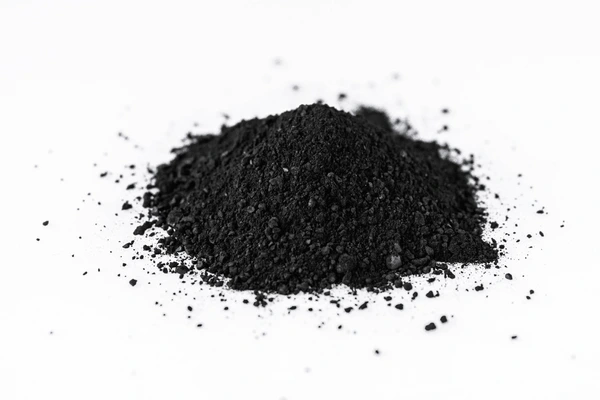
Macroporous structure
Particle: <75μm (200 mesh)
Bulk density: 200-320 kg/m³
Base: Pine · Poplar · Babool · Eucalyptus
Forms slurry when dosed to liquid
Removed by filtration after use
Wood Granular: Water & Industrial
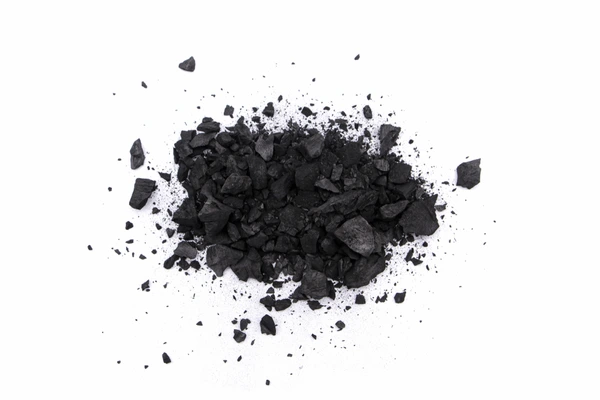
Macroporous/mesoporous
Particle: 0.6-2.4mm (8×30 mesh)
Bulk density: 270-380 kg/m³
Base: Pine · Poplar · Babool
Packed in fixed-bed contactors
Reactivatable after use
Coconut Granular: Water & Industrial
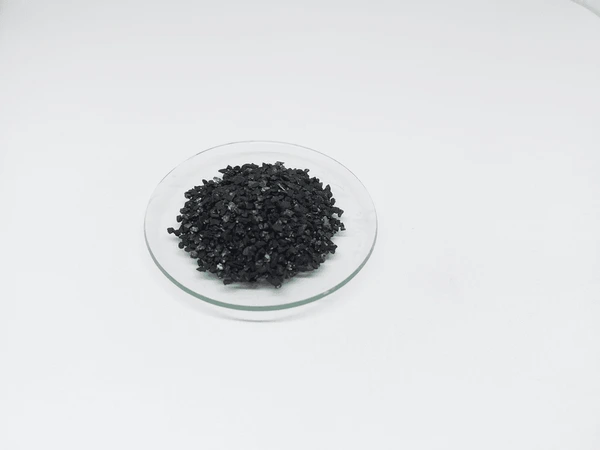
Microporous structure
Particle: 0.42-1.7mm (12×40 mesh)
Hardness: 98-99% (ASTM)
Bulk density: 450-520 kg/m³
Own Kerala carbonisation plant
NSF / Halal / Kosher certified
ACGOLD Series: Mining & Gold Recovery
K value up to 65
Mesh: 6×12, 8×16 (coarser than water grades)
Hardness: 99% (ASTM)
CTC: 45-65%
Reactivated and reused in circuit
Full batch traceability from Kerala plant
Coconut Powder: Edible Oil Refining
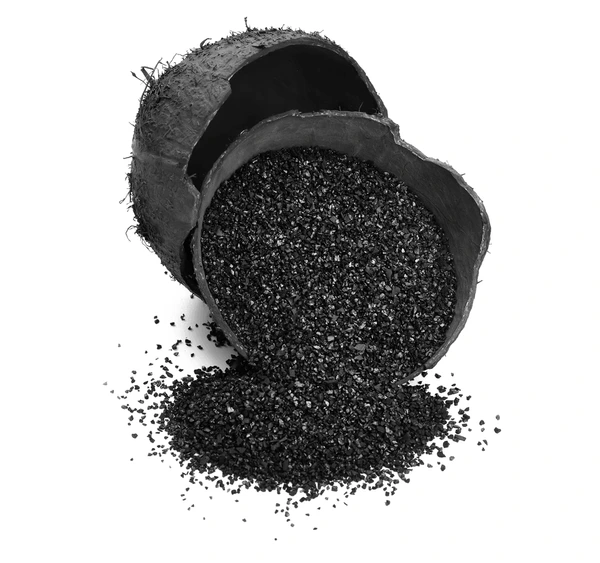
Microporous, tight pore distribution
Particle: 200 mesh or 325 mesh
Water-washed, no acid residues
pH neutral, does not affect oil acid value
Low heavy metals, food safe
Dosed by weight into oil bleaching vessel
Pellets: Gas Phase & Industrial
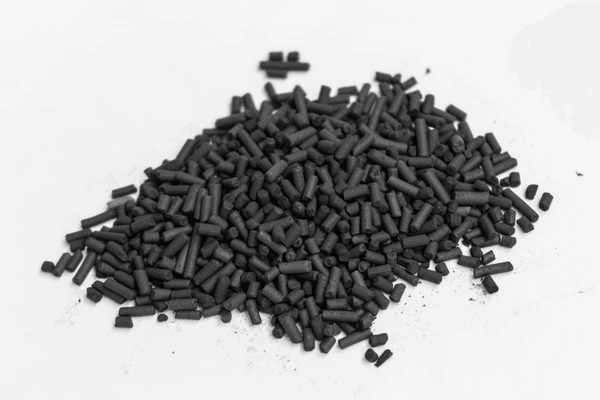
Low pressure drop
3mm or 4mm diameter
Length: 5-15mm (variable)
Available plain or impregnated
Activity: 950 or 1300 mg/g
Impregnated & Specialty Grades
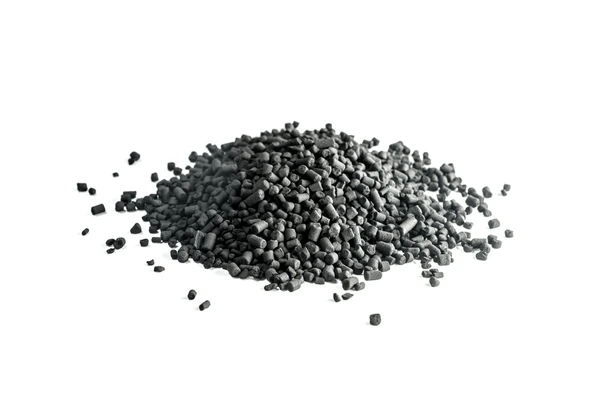
Reagent bound to pore surface
Silver: slight grey tint
ABEK: very fine granule (20×60 mesh)
Custom impregnation to specification
Tested for reagent loading per batch
MOD/CBRN/NSF food available
8. How to Choose the Right Activated Carbon Grade
Selecting the right activated carbon grade comes down to matching the application’s requirements to the carbon’s raw material, physical form and activation characteristics, not to picking the carbon with the highest single number on a spec sheet.
- Confirm whether the process is liquid phase or gas phase; this decides powder/granular versus pellet form.
- Identify the target contaminant: colour body, organic compound, VOC, microbial risk or dissolved metal.
- Check available contact time and equipment: batch dosing with filtration suits powder; continuous flow suits granular or pellet in a fixed bed.
- Consider pressure drop tolerance for gas-phase systems; pelletized carbon generally offers the lowest pressure drop.
- Confirm any regulatory, food-contact or pharmacopoeial requirement, which points toward acid-washed, low-ash, certified grades.
- For abrasive or continuously agitated processes, such as gold recovery, prioritise hardness and attrition resistance.
- Where standard carbon does not offer enough selectivity, such as targeted gas removal or microbial control, consider an impregnated specialty grade.
Looking for the right activated carbon grade for your process?
Grade selection depends on your application, the target contaminant, whether your process is liquid or gas phase, required particle size and pressure drop, available contact time, and any process or regulatory requirement. Rajindra Carbons can help match a wood-based or coconut-shell grade, in powder, granular, pellet or specialty impregnated form, to your specific process.
9. Frequently Asked Questions
Q: What is activated carbon?
Activated carbon is a highly porous form of carbon processed to have a very large internal surface area, typically hundreds of square metres per gram, which allows it to adsorb organic molecules, colour bodies and certain gases from liquids and gases.
Q: What are the main applications of activated carbon?
Activated carbon is used in drinking water and wastewater treatment, air and gas purification, VOC control, edible oil refining, food and beverage processing, pharmaceutical purification, chemical process purification, gold recovery in mining, and specialty applications such as gas mask cartridges. Powder, granular, pelletized and impregnated grades are matched to each application.
Q: What is activated carbon used for in water treatment?
In water treatment, activated carbon adsorbs dissolved organic compounds, taste- and odour-causing substances, and certain trace contaminants. It is typically used as granular activated carbon in fixed-bed filters for municipal and industrial water treatment, or as powdered carbon dosed directly into a water stream for batch or polishing treatment.
Q: Is activated carbon used for wastewater treatment?
Yes. Activated carbon is widely used in industrial wastewater treatment as a tertiary or polishing step, adsorbing residual organics, colour and odour-causing compounds after biological or chemical treatment, which helps meet discharge or reuse standards.
Q: What is the difference between powdered and granular activated carbon?
Powdered activated carbon (PAC) is a fine powder, typically under 75 microns, used for batch dosing into liquids and removed afterward by filtration. Granular activated carbon (GAC) is a coarser, irregular particle, typically 0.6 to 2.4 mm, used in fixed-bed columns where liquid or gas flows continuously through a packed carbon bed, with the carbon reused until exhausted.
Q: What is pelletized activated carbon used for?
Pelletized activated carbon is extruded into uniform cylindrical rods, typically 3 to 6 mm in diameter. Its uniform shape gives a low pressure drop, which makes it well suited to gas-phase applications such as VOC control, odour control and industrial gas purification where large gas volumes must pass through a carbon bed efficiently.
Q: What is the difference between wood-based and coconut-shell activated carbon?
Wood-based activated carbon typically has a macroporous structure suited to liquid-phase decolourisation and purification in water, food and pharmaceutical processes. Coconut-shell activated carbon has a denser, more microporous structure with high hardness, which makes it well suited to drinking water treatment, VOC and gas-phase adsorption, and gold recovery, where hardness and attrition resistance matter.
Q: Which activated carbon is used for gold recovery?
Gold recovery uses coarse, hard coconut-shell activated carbon designed for carbon-in-pulp (CIP), carbon-in-leach (CIL) and heap leach circuits. Rajindra Carbons’ ACGOLD series, including ACGOLD 6SZ, 6SFY, 8SZ and 8SFY, is manufactured specifically for this application, with hardness, K value and CTC activity suited to repeated reactivation and reuse in circuit.
Q: Can activated carbon be used for edible oil refining?
Yes. Water-washed activated carbon powder is used in edible oil refining to remove colour bodies and trace impurities from vegetable oils such as palm oil, rice bran oil and specialty oils. It is typically dosed by weight into the oil bleaching vessel and removed afterward by filtration.
Q: What is activated carbon used for in pharmaceutical manufacturing?
In pharmaceutical manufacturing, acid-washed, high-purity activated carbon powders are used for decolourisation and removal of organic impurities from active pharmaceutical ingredients (APIs) and intermediates. These grades are selected for pH neutrality, low ash content and consistent batch-to-batch quality to meet pharmacopoeial requirements.
Q: How does activated carbon remove VOCs?
Activated carbon removes volatile organic compounds (VOCs) through adsorption: VOC molecules in a gas stream are attracted to and held within the carbon’s internal pore structure as the gas passes over it. Granular and pelletized carbons are commonly used in fixed beds for continuous VOC control in industrial ventilation and process gas streams.
Q: How do I choose the right activated carbon grade?
Grade selection depends on the application, the target contaminant, whether the process is liquid or gas phase, required particle size and pressure drop, contact time available, and any regulatory or purity requirements. Matching these factors to a carbon’s raw material, physical form and activation characteristics determines the right grade.
Q: What is impregnated activated carbon?
Impregnated activated carbon has a reagent, such as silver or an ABEK-type chemical blend, bound to its pore surface during manufacture. This changes its adsorption selectivity, allowing it to target specific contaminants, such as microbial regrowth in drinking water filters or specific gases in gas mask and CBRN cartridges, that unmodified carbon does not address as effectively.
Q: What factors affect activated carbon performance?
Activated carbon performance depends on pore structure and surface area, particle size, surface chemistry, contact time between the carbon and the target contaminant, moisture content, and the specific properties of the contaminant being adsorbed. Indicators such as iodine number and methylene blue value are commonly used to characterise a carbon’s adsorption capacity.
Q: Where can I source industrial activated carbon?
Rajindra Carbons, under the UCI Carbons Group, supplies wood-based and coconut-shell activated carbon in powder, granular, pellet and specialty impregnated forms for water treatment, gas purification, edible oil refining, pharmaceutical, chemical and gold recovery applications. Technical data sheets and samples can be requested for specific grades.
Matching the Right Carbon to the Right Process
Activated carbon is not a single product; it is a family of materials, differentiated by raw material, pore structure, physical form and surface chemistry, each suited to a specific job. Wood-based powders and granules serve liquid-phase decolourisation and purification across water, food and pharmaceutical processes. Coconut-shell carbon brings hardness and microporosity to drinking water, gas-phase and gold recovery duty. Pellets carry gas-phase adsorption at low pressure drop, and impregnated specialty grades extend carbon’s selectivity to microbial control and targeted gas removal.
Rajindra Carbons manufactures across this full range, wood and coconut shell, powder, granular, pellet and specialty impregnated grades, with its own Kerala carbonisation facility supporting the coconut-shell line. Whichever application you are working on, from a municipal water plant to a gold processing circuit, the starting point is the same: define the process requirement first, then match the carbon to it.
Request a technical data sheet or sample
Share your application, target contaminant and process conditions, and Rajindra Carbons will help identify the grade suited to your process, whether that is a wood-based powder for pharmaceutical decolourisation, a coconut granular for drinking water, an ACGOLD grade for a gold recovery circuit, or a pelletized carbon for gas-phase treatment.